
Europe’s Innovation with Confidence: “Fund Real Risks, View Failure as a Learning Experience”
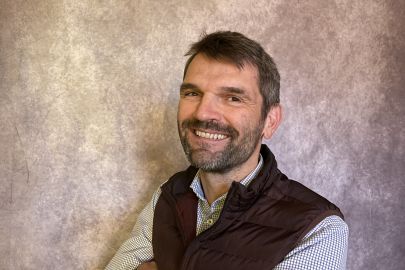
Mario, Europe is struggling to maintain its global relevance as a business hub. How do you view this development?
Europe has many strengths, but it needs a bolder mindset. Here in Europe, people are quick to say: “That plan won’t work. You’re not qualified for that. That’s not feasible in practice.” In Silicon Valley, you hear much more often: “I don’t get it—explain it to me again. “That sounds exciting. Have you talked to X or Y yet? They might be able to help you.” In the first case, you have to justify yourself and lose your momentum. In the second, you come away from the conversation with more energy and often with new ideas and contacts. Europeans don’t like hearing that and consider it a platitude, a cliché. But in times of radical transformation, this mindset makes a decisive difference.
What stands in the way of a willingness to take risks?
The demand for certainty before I try something. We want new experiences within a safe framework—that’s a contradiction. When it comes to autonomous driving technology, for example, we first want to understand everything and rule out every risk. But that’s how we delay progress. You only learn something truly new through practice—by trial and error.
People just don’t want to fail right off the bat.
Yes, failure still comes at a high social cost here in Europe, based on the idea that if you don’t take risks, you’ll still have your schnitzel and your beer tomorrow. But if you take a risk—for example, by starting a business—and fail, your family, your community, and your industry will know about it… your reputation suffers, and it’s hard to recover from that. Here in the Valley, failure isn’t seen as a stigma, but as part of the entrepreneurial maturation process. People ask: What did you learn from this, and what will you do better next time?
Why do some established companies struggle so much with radically new ideas?
Many are led by managers, not founders anymore. Managers succeed because they manage risk. Then they’re appointed for four years, expected to increase profits and shareholder value—and suddenly they’re supposed to take a gamble whose rewards might be reaped by the third CEO after them? This shift is difficult. Google began working on autonomous driving in 2009 and invested billions over the years; Volkswagen had several CEOs during that time. That’s the conflict.
What can management do better?
It can and should admit that it doesn’t know the future. To the outside world, the message is always: “We know where we’re headed; we’re well positioned.” Of course they don’t know. Good leadership doesn’t have to have every answer; rather, it must create an environment where better answers emerge.
How can you cultivate the necessary willingness to take risks?
When European delegations visit me, I always have a stuffed animal with me. Anyone who says something that stifles an idea gets it. “That won’t work for us because of XY” ends the discussion. “How can we integrate the idea into XY so that it works?” opens up new ways of thinking. After a few days, people start listening to each other more consciously, and they realize how habitually they see obstacles instead of opportunities. I’m from Vienna myself—as everyone knows, we’re the world champions of complaining. Even after 20 years in Silicon Valley, the stuffed animal still ends up with me on a regular basis (laughs).
What helps to consciously keep the discourse on innovation open?
Psychological safety. That means someone can voice an idea that sounds silly at first and know that others are listening seriously. Imagine how you would have reacted if, back in 2005, someone had told you about a global platform for 140-character messages. Maybe you would have thought, “Who needs that kind of nonsense?” Or you might have asked, “What problem does this solve? What are we testing?” Psychological safety doesn’t mean a culture of coddling. But you give the idea a chance before you dismiss the person behind it.
How much can be blamed on the system—regulation, politics, corporate structures?
Of course, there are systemic problems. But I don’t accept that as an excuse. Often, it’s just a justification for not taking any risks. Everyone should ask themselves: When faced with something new, do I quickly see reasons why it won’t work? Do I encourage experimentation and allow for uncertain outcomes? Do I make connections without reservation?—Those who stifle every idea in their own field shouldn’t just point the finger at Brussels.
Where, however, does European policy need to step up its game?
In terms of technological understanding. AI, humanoid robotics, nuclear fusion, and quantum computers are difficult to understand. Policy shouldn’t be made by technocrats alone. But when decision-making bodies have hardly anyone with a technical or scientific background, the significance, pace, and urgency of these issues are easily underestimated.
On innovation with venture capital: Is Europe short on money?
No. The money is there; it’s just not flowing enough into risky ventures. Even the terminology is interesting: “venture capital”—it implies adventure: we’re taking a chance together on something exciting. “Risikokapital” in German sounds like something to be avoided. An entrepreneur from a small-to-medium-sized business in one of my delegations took three days to understand that venture capital isn’t a bank loan. As we know, the reality is this: Many startups fail, some do quite well, but only one breaks through the ceiling and transforms the industry.
What’s important to you when evaluating a startup?
The awareness that a startup isn’t a small, established company. A traditional company knows its product, customers, and business model. A startup, on the other hand, is still searching for them. That’s why user growth and learning progress are often more important than revenue in the beginning.
What role do networks play?
A huge one—if you don’t treat them like private property. An Austrian manager recently reminded me that, after our first coffee years ago, he received three emails from me right away with introductions to interesting people. He was completely blown away at the time. For me, that was normal. “Pay it forward” means: I’ll help you without immediately asking what I’ll get in return. The help cascades through the system.
How do you view the current European debate on innovation capacity?
We expend an enormous amount of cognitive energy trying to figure out why something can’t work. Of course, government agencies and the media need to highlight risks. But when AI, robotics, electric cars, or autonomous driving are portrayed in public discourse almost exclusively as threats, it stifles the spirit of experimentation in politics and business. And while we in Europe warn and wait, other economic hubs are gaining valuable experience and shaping the future without us.
What are the most important levers for Europe?
Listen to how we talk about new things. Tolerate uncertainty. Treat failure as a learning opportunity. Allowing experiments. Letting capital truly finance risk. Bringing more technical understanding into decision-making. Opening up networks. And spending less energy explaining why something won’t work.
You sound optimistic.
Yes! Turn around in the room: Almost everything you see is technology—medicines, hygiene, glasses, heating, communication. The luxury of being able to complain about technology is itself a result of technology. Humans are Homo technicus. We simply can’t help but constantly develop new approaches and expand our possibilities.
Sigrid Gaisch-Faustmann