Focus Topic: Battery Technology
Battery Technology Made in Styria: The Key to a Sustainable Future
- Global demand for batteries will continue to grow strongly through 2030—primarily driven by electric mobility and stationary energy storage.
- Styria is focusing specifically on specialized segments such as mechanical and plant engineering, battery management systems, electronics, software, recycling, and testing infrastructure.
- The Battery Pilot Process brought together companies, research institutions, and networks along the value chain and translated their collaboration into concrete actions.
Market and Outlook
Why Battery Technology Now?
Battery technology is a key future field for decarbonization, mobility, and energy systems. This is precisely where its relevance to Styria lies: not as a cell production hub, but as a specialized technology and implementation partner.
Global Market Trends
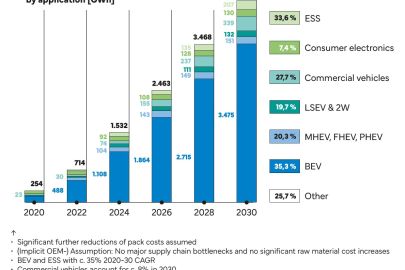
The market for lithium-ion batteries is projected to grow to approximately 4,500 GWh by 2030. Battery-electric vehicles and stationary energy storage systems are experiencing particularly dynamic growth.
International Dynamics
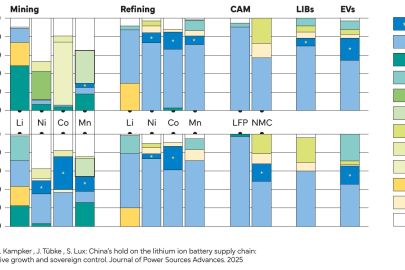
China currently dominates large parts of the value chain. At the same time, efforts in Europe to build up its own capacities and expertise are increasing.
For Styria, this opens up opportunities in those fields where strong industrial and scientific expertise already exists today.
Styria's Strengths
Battery Technology Made in Styria
Styria’s strength lies in the combination of industry, research, and application-oriented development. System integration, electronics, software, production technology, recycling, and testing infrastructure are particularly relevant.
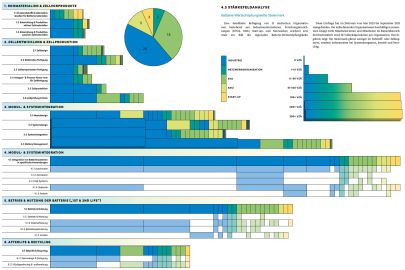
The analysis shows where Styria is particularly well-positioned along the battery value chain.
Market Potential and Opportunities
Opportunities in Specialized Segments
The battery industry is a key component of future energy systems. This is precisely why it is important to maintain a clear focus on those areas in which Styria already possesses particular strengths.
What Makes Styria Particularly Interesting
The region’s strength lies in the combination of industrial implementation, research expertise, and application-oriented development. This creates favorable conditions for projects highly relevant to the automotive sector, stationary storage systems, and other specialized applications.
At the same time, a challenge arises: If cell production moves abroad, risks emerge for demand, research, and follow-up projects. This makes it all the more important to consistently further develop existing areas of specialization.
Pilot Battery Process
From Networking to Implementation
The process deliberately remains in the background but is important as an enabling framework: it connects stakeholders, refines topics, and initiates concrete collaborations.
Interested in a partnership?

Strong Support for the Site Development Process

Mit dem Laden des Videos akzeptieren Sie die Datenschutzerklärung von YouTube.
Mehr erfahren
Statement by State Councilor Willibald Ehrenhöfer
Projektmanager Standortentwicklung & Standortmanagement
+43 316 7093 333
Projektmanager Standortentwicklung & Standortmanagement
+43 316 7093 306
Projektmanagerin Standortentwicklung & Standortmanagement
+43 316 7093 336