Focus on Battery Technology
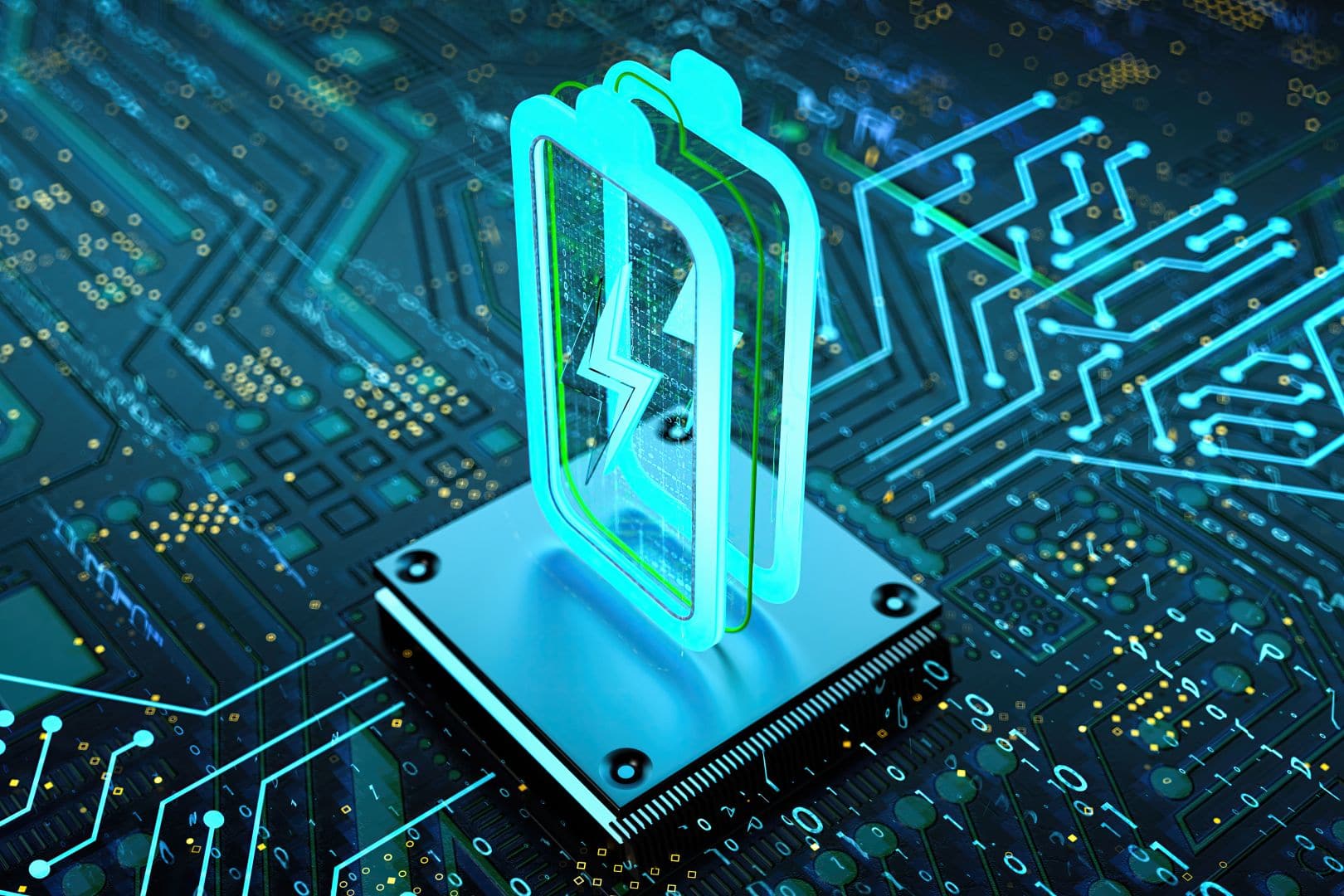
Battery Technology Made in Styria: The Key to a Sustainable Future
According to the IEA, global demand for batteries will increase more than tenfold by 2030. The main drivers are electric mobility and stationary energy storage. At the same time, over €620 billion is expected to be invested in the battery value chain by 2030.
The EU is promoting the development of its own capacities (including IPCEI and BEPA) to ensure technological sovereignty. At the same time, international competition for production and innovation hubs is intensifying.
In this environment, Styria is strategically positioning itself as a technology hub. Around 70 companies and research institutions were involved in the pilot process across the entire value chain.
The focus is not on cell production, but on specialized segments:
- Machinery and plant engineering for cell and module production
- Battery management systems, electronics, and software
- Recycling and second-life applications
- Test infrastructure
These areas are supported by existing expertise in materials research, automotive, and green tech.
Location Development – Pilot Process on the Key Theme of Batteries
The pilot process began in 2024 with a clear political mandate. The goal is the systematic networking of relevant stakeholders and the development of joint projects.
Key principles:
- Coordination of all stakeholders (“swarm logic”)
- Iterative approach with ongoing adaptation
- Focus on concrete implementation steps
The SFG assumes a dual role as process manager and funding body. Business, science, and politics collaborate on strategy and implementation.
The organizational structure includes:
- Steering Group and SFG (Leadership)
- Expert group (technical implementation)
- Extended network (“scene”)
Activities are coordinated horizontally and embedded vertically into long-term strategies (through 2035).
Economic Significance & Market Potential
Global Market Development
The battery industry is central to decarbonization and energy systems. The market for lithium-ion batteries will grow to approximately 4,500 GWh by 2030.
China currently dominates the value chain but has excess capacity: Production capacity is about 3.9 times higher than demand, while capacity utilization is below 45 percent.
Technological trends:
- Lithium iron phosphate batteries are gaining market share
- Sodium-ion as an alternative for certain applications
- Lithium metal will become relevant no earlier than 2028
- Defect rates are falling from “parts per million” to “parts per billion” thanks to digitalization
- Recycling and second life are becoming increasingly important
The EU is providing additional regulatory impetus (e.g., battery pass starting in 2027).
Strategic opportunity areas
Styria’s strengths:
- Mechanical and plant engineering
- Battery management systems, electronics, software
- Materials research and recycling
- Testing infrastructure
Challenges
Risks arise in particular when cell production is relocated:
- Loss of industrial demand
- Reduced relevance of research
- Weakening of the entire value chain
The Battery Pilot Project
Project participants
The process involves companies, research institutions, and networks. In addition to analysis, the goal was to generate concrete results and foster collaboration.
Interviews and preliminary work
Eight experts confirm:
- strong foundation in chemistry, mechanical engineering, and electronics
- clear niches in battery management systems, software, recycling, and production technology
- growing importance of stationary storage
Key areas of action:
- Expansion of collaborations and networks
- Training of skilled workers
- Greater regulatory clarity
Strength analysis
The study examined 51 organizations with a total of approximately 3,000 employees, averaging about 58 full-time equivalents per organization.
Results:
- 43% industry, approximately 33% research, remainder SMEs/startups/networks
- Focus on system integration (around 40% of participants)
- 37% in operations (primarily data collection, more than 80%)
- Approximately 25% in recycling (strong focus on material recovery)
- No cell production, but 22% in cell-related research
Applications:
- 80% automotive
- 70% stationary energy storage
- Approximately 25% each in rail and aviation
Implementation and Results
The process included workshops, events, and international formats.
An R&D call with €3 million in funding resulted in 21 projects, 5 of which received funding (€2.89 million).
The Battery Innovation Days 2025 attracted over 600 on-site participants and over 1,000 online.
Key Findings
Styria is not developing a cell production center, but rather a specialized technology and systems hub. The focus is on integration, software, production technology, and recycling. Key factors include networking, targeted funding, and securing value creation despite global competition.
Strong support for the location development process

Mit dem Laden des Videos akzeptieren Sie die Datenschutzerklärung von YouTube.
Mehr erfahren
Statement by Provincial Councilor Willibald Ehrenhöfer

Projektmanager Standortentwicklung & Standortmanagement
+43 316 7093 333
Projektmanager Standortentwicklung & Standortmanagement
+43 316 7093 306
Projektmanagerin Standortentwicklung & Standortmanagement
+43 316 7093 336